2025 Topps Series 1 Baseball Review & Checklist
The 2025 Topps Series 1 checklist and set guide — the 350-card base structure, every parallel and short-print variation to chase, the insert lineup, the rookie class, box breakdowns, and whether it's worth buying in 2026.
Overview
2025 Topps Series 1 dropped in February 2025 and represents the flagship opening release of the MLB season. The 350-card base set covers every team, combines veteran stars with a strong rookie class, and — as always with Topps flagship — sets the baseline for every other 2025 baseball release that follows.
This is the single most-ripped box of the year for a reason: it’s the definitional mainstream MLB card set, and pulling the Paul Skenes or Jackson Merrill rookie is still (even in 2026) one of the most celebrated early-season moments in the hobby.
Box Configurations
2025 Topps Series 1 ships in several formats. Each targets a different buyer:
| Format | Packs × Cards | Price tier | Guaranteed Hits |
|---|---|---|---|
| Hobby Box | 20 × 12 = 240 | $$$$ | 1 auto or relic |
| Jumbo (HTA) Hobby Box | 10 × 46 = 460 | $$$$$ | Multiple autos + relic |
| Retail Value Box | 20 × 12 = 240 | $$ | No guarantee |
| Retail Mega Box | 8 × 20 = 160 | $$$ | No guarantee, exclusive parallels |
| Blaster Box | 7 × 14 = 98 | $$ | No guarantee |
| Hanger Box | 2 × 72 = 144 | $ | No guarantee |
The Hobby box is where the serious auto/relic chase lives — a guaranteed autograph or relic in every 20-pack box. Retail products trade that guarantee for exclusive retail parallels you can’t pull from hobby. (Price tiers are relative — $ is the cheapest rip, $$$$$ the most premium — because current listings move; see the live product listings lower on the page for what each format actually costs today.)
Set Structure & Checklist
The 2025 Topps Series 1 base set is 350 cards, numbered #1-350. If you’re building the set or reading a want list, here’s how the checklist is organized:
- Veterans and stars make up the bulk of the run — every team represented, with the game’s marquee names anchoring the set. Shohei Ohtani holds the #1 slot, the traditional flagship honor.
- Rookie Cards carry the RC logo and are salted throughout the numbering rather than grouped — Skenes, Merrill, Langford, Chourio, Crews, Rice, Wood and the rest sit among the veterans, so a checklist is the only reliable way to find every rookie.
- Subsets round out the base run: Future Stars (the up-and-comers), League Leaders (statistical toppers), and Team Cards. These share the #1-350 numbering, so a “team card” and a “star card” are both just base cards to the set builder.
That 350-card base is only the foundation. Each card also exists as 50+ parallels (see below), a full slate of short-print image variations, and the cards get pulled into insert and autograph checklists — which is why the master checklist runs into the thousands even though the set you’d physically build is 350. For most collectors, “the checklist” means those 350 base cards plus whichever variations and inserts you choose to chase.
New to reading flagship checklists? Our how to read a baseball card guide explains what the card number, RC shield, and serial numbers actually tell you.
Rookie Class
2025 Topps Series 1 has one of the better rookie classes of the past decade:
- Paul Skenes — the crown jewel. His 2024 ROY performance and ongoing ace-level dominance make any Skenes RC in this set a keeper.
- Jackson Merrill — the Padres rookie who finished second in ROY voting. Strong modern RC candidate.
- Wyatt Langford — the Rangers rookie with elite tools; his RC carries long-term potential if he stays healthy.
- Jackson Chourio — the Brewers outfielder locked up to a nine-figure extension as a 20-year-old.
- Dylan Crews, Ben Rice, James Wood — the Nationals/Yankees rookie wave, all carrying flagship RCs in this set; Wood and Crews in particular are strong secondary chases.
- Colton Cowser, Jackson Holliday, Colt Keith, Masyn Winn — secondary rookies worth chasing in later years if they develop.
Because rookies aren’t grouped in the numbering, chasing a specific player means working from a checklist or targeting singles directly. Not sure whether a card counts as a true rookie? The is my card a rookie card? guide covers the RC-logo rule.
Parallels & Chase Cards
2025 Series 1 runs more than 50 parallels of each base card. The structure follows the standard Topps flagship rainbow — a foil ladder that gets scarcer, and more valuable, the lower the print run:
- Rainbow Foil — the common, unnumbered foil parallel; visually distinctive but not scarce.
- Gold /2025 — the signature base numbered parallel, always matched to the release year.
- Holo Foil color tiers — the numbered climb: Purple /250, hobby-exclusive Blue /150, hobby-exclusive Green /99, tightening toward the top.
- One-of-ones — Platinum 1/1 and the four Printing Plates (Cyan, Magenta, Yellow, Black), the true unique cards of each player.
- Retail-exclusive parallels — Holo Foil and Rainbow Foil colors (Aqua, Pink, and retailer-specific tints) that only come out of retail formats, never hobby.
The honest caveat: this is the shape of the ladder, not a frozen spec sheet — Topps assigns and occasionally shifts print runs, and there are far more color/foil combinations than any collector chases. The serial number stamped on the card is the source of truth — read it rather than trusting the color name. For the full logic of how print run sets the ceiling while the player sets the price, see our parallels and refractors explained reference.
Short-Print Variations
Beyond the numbered parallels, 2025 Series 1 hides a layer of short-print image variations — cards that share a base card number but swap the photo (and sometimes the foil), so they look like base cards until you know the tells. These are among the most-chased pulls in the set:
- Golden Mirror Image Variations — the flagship SP, now in its third year. Every one of the 350 base cards has a Golden Mirror version with a different photo, a gold foil logo (instead of the usual silver), and a gold-background back. The gold logo and back are the quickest tells.
- Team Color Border Variations — an alternate photo with a border tinted to the player’s team colors.
- True Photo Variations — a swapped, often candid or celebration-style image.
- Base Player Number Variations (new for 2025) — a variation keyed to the player’s uniform number.
- Dancing Dodgers Variations (new for 2025) — a 10-card, hobby-exclusive run themed to the Dodgers, with unannounced odds — one of the toughest pulls in the product.
Because these mimic base cards, sort a fresh box carefully: check the logo foil color and the card back before you write anything off as a common. A missed Golden Mirror is money left in the pile.
Insert Sets
2025 Topps Series 1 leans on its 35th-anniversary tribute to the 1990 Topps design and a deep insert lineup:
- 1990 Topps Baseball (35th Anniversary) — the headline insert, a 100-card checklist of rookies, veterans, and legends on the iconic 1990 design; it also has its own Chrome version.
- Home Field Advantage — returns bigger than 2024: 20 cards plus 5 Legendary Home Field Advantage cards.
- 2024 All-Topps Team and 2024 Greatest Hits — season-in-review inserts.
- All Aces, Call to the Hall, Heavy Lumber, Plakata, and Training Grounds — the themed insert rotation (pitchers, Hall-of-Fame track, sluggers, and prospect-focused sets).
On the autograph side, the on-card signature checklists are Baseball Stars Autographs, 1990 Topps Baseball Autographs, and the new-for-2025 Flagship Real One Autographs — each with its own numbered parallel ladder (Gold /50, Orange /25, Black /10, Red /5, up to a 1/1 Foilfractor or Platinum), plus relic and patch cards. The autograph or relic in your hobby box comes from this pool.
Key Cards to Chase
A 350-card base set plus thousands of parallels, variations, and autos can make “what’s actually worth chasing?” feel impossible. In practice the value of 2025 Series 1 concentrates in a short, knowable list. Here is the chase hierarchy, from the cards that define the set down to the strong secondary targets — ranked by demand and scarcity, not by any dollar figure (for what a specific copy actually trades at, use the live eBay listings at the bottom of this page):
- Paul Skenes base Rookie Card — the single most important card in the product. As a plain base RC it’s affordable and buildable; as a numbered parallel it becomes the set’s marquee chase. The rainbow to know: Gold /2025, hobby-exclusive Blue /150 and Green /99, the Platinum 1/1, and the four Printing Plates. A low-numbered Skenes is the card most likely to anchor a want list.
- Shohei Ohtani #1 — the flagship #1 slot carries its own collector premium every year, and Ohtani makes 2025’s the most desirable in a long time. The Golden Mirror version and any low-numbered parallel of #1 are the ones to watch.
- Golden Mirror Image Variations of the headliners — the set’s flagship short-print (gold logo, gold back, different photo). A Golden Mirror of Skenes, Ohtani, or Merrill is among the toughest and most sought pulls in the product — and, because they masquerade as base cards, the ones most often missed. (Not sure how to spot one? The tells — gold logo, gold back — are in the Short-Print Variations section above.)
- On-card autographs — the guaranteed hobby-box hit comes from the Flagship Real One, Baseball Stars, and 1990 Topps auto checklists. A Skenes or top-rookie auto, especially in the numbered tiers (Gold /50, Orange /25, Black /10, Red /5, up to the 1/1 Foilfractor), is where the deepest single-card value in the set sits.
- Secondary rookie RCs — Jackson Merrill, Dylan Crews, James Wood, Jackson Chourio, and Wyatt Langford. These are the names most likely to appreciate if a player takes the next step, which makes their base RCs and low parallels the smart-speculation tier of the checklist.
- The 1/1 trophies — the Platinum 1/1 and Printing Plates of any headliner. These are lottery-ticket pulls rather than build targets, but they’re the cards that define a break when they hit.
The honest framing: everything on this list is a player bet layered on a scarcity structure. The print run stamped on the card sets the ceiling; the player on the front sets the price — and only the live market can tell you where the two meet today. That’s exactly why the exact-card eBay searches below matter more here than any published price would. New to how those two forces interact? Our parallels and refractors explained reference walks the full logic, and is my card a rookie card? settles what counts as a true RC.
Is 2025 Topps Series 1 Worth Buying in 2026?
The answer depends on what you want.
As a ripper: Yes, especially in retail form. A retail blaster is the cheapest honest entry point into modern baseball. The chance of pulling a Skenes or Merrill RC — or sorting out a sneaky Golden Mirror variation — out of a pack is part of the fun.
As a set builder: Yes. The 350-card base set is collectible and affordable raw. Complete-set boxes exist if you want to skip the building and just have the whole thing.
As an investor: Only specific cards. The base RCs of top rookies, numbered parallels, and any on-card autographs are where value lives. Sealed Series 1 hobby boxes have not historically appreciated the way Chrome or prospect product has.
Where to Buy 2025 Topps Series 1
All the major box configurations are still in print as of April 2026 via Amazon and hobby retailers. Listings below cover the major formats at current prices. Series 1 also earns a spot in our roundup of the best baseball card boxes to buy, where it’s ranked against every other current release.
Final Verdict
Rating: 8/10. Strong rookie class, the traditional flagship build, and the most liquid resale market in the category. Series 1 won’t make you rich, but it’s the most reliable annual release for any collector building a year-by-year baseball set. The Hobby box is for the hit-chase; the retail blaster is for the joy of ripping packs. Either way, you’ll end up with Paul Skenes rookies, which is its own reward.
Find the key singles on eBay
The chase rookies, parallels, and autographs from this set trade as singles on eBay, not in sealed Amazon boxes — these open live listings so you can see the current market for the exact card rather than gambling on a pack pull.
Where to Buy This Set

2025 Topps Series 1 Baseball Hobby Box
Amazon →

2026 Topps Series 1 Baseball Blaster Box, Look for Retail Exclusive Holo Holo Foil Parallels & Spring Training Variations
Amazon →
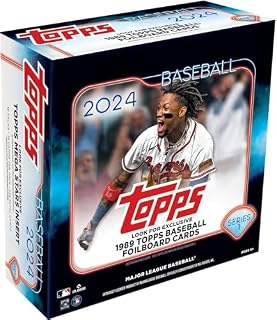
Topps 2024 Series 1 Baseball Factory Sealed Monster Box - Baseball Complete Sets
Amazon →
Frequently Asked Questions
How many cards are in the 2025 Topps Series 1 checklist?
What's guaranteed in a 2025 Topps Series 1 Hobby Box?
What are the short-print variations in 2025 Topps Series 1?
Which parallels should I chase in 2025 Topps Series 1?
Who are the top rookies in 2025 Topps Series 1?
What are the most valuable cards in 2025 Topps Series 1?
Are 2025 Topps Series 1 boxes a good value?
Other Set Checklists & Reviews
Every review below breaks down the same things this one does — base set structure, card numbering, the parallel ladder, and what the real chase cards are. Use them to compare how two sets are actually built before you decide which one to buy into.
2026 Topps Series 1 Baseball Review & Format Guide
Topps' 75th-anniversary flagship, headlined by Roman Anthony and the 2025 debut class. Retail packs run 14 cards, hobby packs 12 — and the retail-exclusive Holo Foil parallels and Spring Training variations are the chases hobby boxes can't produce.
2025 Topps Heritage Baseball2025 Topps Heritage Baseball Review & Checklist
A 500-card master set — a 400-card base run (#1–400) plus 100 short-printed high numbers (#401–500). The chase is Real One on-card autos and the image, nickname and flipped-bat variations.
2024 Topps Chrome Baseball2024 Topps Chrome Baseball Review & Checklist
A 300-card base set (#1–300) carrying 113 rookies. The chase is the Refractor rainbow, Speckle image variations and the Award Winners /23 short prints.
2025 Bowman Chrome Baseball2025 Bowman Chrome Baseball Review & Checklist
A 200-card base set split evenly — #1–100 base plus 100 BCP Chrome Prospects. The chase is the CPA on-card 1st Bowman autographs from the Holliday/Rainer prospect class.
2024 Bowman Chrome Baseball2024 Bowman Chrome Baseball Review & Checklist
A 200-card core in two halves — a #1–100 base run plus 100 BCP Chrome Prospects. The chase is the CPA prospect autos and Chrome Rookie Autos, and Skenes' 1st Bowman is not in it.