Is My Card a Rookie Card? How to Tell (RC Logo, First Bowman & More)
How to tell if a baseball card is a true rookie card: what the RC logo means, why the first Bowman is not technically a rookie card, and how to identify rookies from the pre-2006 era.
What This Guide Recommends
The picks referenced below, at a glance — our verdict, current availability, and who each one suits.

Elite rookie at accessible blue-chip pricing

Blue-chip modern card investing

Growth-stage rookie investing
Budget boxes with grading-worthy upside
Elite rookie at accessible blue-chip pricing
Blue-chip modern card investing
Growth-stage rookie investing
Budget boxes with grading-worthy upside
The Question Every New Collector Asks
Pull a shiny card of a young star out of a fresh pack, or dig one out of an old shoebox, and the first thing you want to know is simple: is this a rookie card? It is the single most-asked question in the hobby, and for good reason — the rookie card is almost always the most sought-after and valuable card a player has. A true rookie of a superstar can be worth many times more than a nearly identical card printed a year later.
The trouble is that “rookie card” means something very specific, and the rules changed in 2006. There are also two lookalikes that fool almost every beginner: the first Bowman prospect card and the pre-rookie/second-year card. This guide walks you through exactly how to tell a real rookie from a pretender, what the RC logo is and where to find it, and how the rules differ for modern versus vintage cards. By the end you will be able to pick up any baseball card and know, with confidence, whether you are holding a rookie.
If you are brand new to the hobby, it is worth reading our beginner’s guide to collecting alongside this one — it covers card types, where to buy, and how to protect what you pull. And once you can spot the RC shield, our companion explainer on how to read a baseball card decodes everything else on the cardboard: the card number, parallels, serial numbers, and how to date a card from its back.
The Short Answer: Look for the RC Logo
Since 2006, the identification of a modern rookie card is refreshingly simple. Topps and the other MLB-licensed manufacturers stamp officially designated rookies with a small RC shield — a badge or crest, usually reading “RC” or “Rookie Card,” printed right on the card front.
If the RC logo is there, the card is an official rookie card. If it is not, the card is not a rookie — no matter how young the player is, no matter how new the card looks. That one badge is the industry’s own answer to the question, and it is legally standardized: the logo only appears on a player’s first year of MLB base cards after he has been added to a 40-man roster or made his debut.
Where the RC logo hides
The RC shield is deliberately small so it does not fight with the card’s design, which is exactly why beginners miss it. Its location moves from year to year, but it is almost always:
- In a lower corner of the card front, or
- Tucked along the bottom edge near the player’s name or team logo.
Scan those areas first. It helps to tilt the card under good light — on Chrome and other foil cards the logo can blend into a reflective background. If you have found a small shield with “RC” inside it, you are holding an officially designated rookie card. If you have scanned the whole front and there is no shield, it is not a modern rookie.
The Trap Everyone Falls Into: “First Bowman” Is Not a Rookie Card
Here is the distinction that trips up more new collectors than any other. A player’s first Bowman card — often called a “1st Bowman” — is usually a prospect card, printed while he is still in the minor leagues, sometimes years before he reaches the majors. Because the official rules say a rookie card can only be issued after a player debuts in MLB, first Bowman prospect cards do not carry the RC logo and are technically not rookie cards.
This confuses people because the first Bowman is frequently the most valuable card a prospect has. Prospectors love them: you are buying the earliest licensed card of a future star, before the world knows his name. A 1st Bowman Chrome autograph of a hyped prospect can command serious money. But “most valuable” and “official rookie card” are two different things, and knowing the difference protects you when you buy or sell.
So the practical rule:
- 1st Bowman (prospect card): earliest card, no RC logo, prized by prospectors. Often more expensive than the eventual rookie.
- Rookie card (RC logo): the flagship card issued after the MLB debut, carrying the official shield.
If you want the full breakdown of why Bowman is the prospect brand while Topps flagship is where the official rookies live, our guide to Topps vs. Bowman vs. Panini explains how the brands divide up the calendar, and Topps Chrome vs. Topps flagship covers the chrome-versus-paper question that follows right behind it. To see how much prospectors pay for those first Bowman autos, browse our list of the top 10 Bowman Chrome rookie autographs.
Modern Rookies in Practice
Put it together and the modern era is clean. Take a few real examples from players we cover:
- Shohei Ohtani — his widely recognized flagship rookie is the 2018 Topps card, which carries the RC shield. His earlier NPB-era and pre-MLB cards are not his official RC. A graded gem-mint example — like his 2018 Topps #700 in PSA 10 — is a blue-chip modern card precisely because it is the rookie.
- Ronald Acuña Jr. — the 2018 Topps Baseball #700 Shohei Ohtani Rookie Card Graded PSA… is the RC-logo flagship. See his full breakdown on the Acuña player hub.
- Roman Anthony — a current example of the Bowman-vs-rookie split. His 2024 Bowman Draft card is a prospect card (no RC logo) and already a premium chase; his official rookie card follows once his flagship RC-logo issue lands. His player hub tracks both.
That pattern repeats for every young star — Paul Skenes, Bobby Witt Jr., Jackson Chourio, Julio Rodríguez: a run of hyped first Bowman prospect cards, then the RC-logo flagship rookie once they arrive. For the cards actually worth chasing, our top modern rookie cards to invest in and the full best rookie cards roundup rank them.
Vintage & Junk-Wax Rookies: No Logo, So Use the Year
The RC shield did not exist before 2006, so for anything older you identify a rookie the old-fashioned way: by year and set. The accepted definition is that a rookie card is from the player’s first year appearing on a widely distributed, MLB-licensed base card.
A few rules of thumb for the pre-logo era:
- Match the set year to the player’s first card year. A 1989 Upper Deck Ken Griffey Jr. is his rookie because 1989 was his first mainstream base card; a 1990 or 1991 Griffey is not. This is why the 1989 Upper Deck #1 is such an icon — it is the definitive junk-wax-era rookie.
- Beware reprints and retro inserts. Modern products constantly reprint famous rookies and issue “rookie reprint” inserts. These are not the original rookie and carry a fraction of the value. Check the copyright year on the back and the set name.
- Watch for the “second-year” trap. A card from the year after a player broke in is a common and much cheaper lookalike. It is not the rookie.
- XRC and traded/update sets (extended rookie cards, like the Traded and Update boxed sets of the 1980s) are their own niche — sometimes a player’s first card appears there before his base flagship. When a set is famous for early rookies, verify against a checklist rather than guessing — the 2026 Topps Update Series checklist is the current example.
For the marquee old cards and how to read them, see our top 15 vintage baseball cards of all time.
How to Confirm It for Certain
If you have scanned for the logo and checked the year and still are not sure, three moves settle it:
- Compare against a checklist. Every set has a published checklist; if the card and number are listed as the player’s rookie in that set, you have your answer. (We are building per-set reference checklists as part of our tools and data layer.)
- Let a grader confirm it. When PSA, SGC, BGS, or CGC slab a card, the label explicitly notes “RC” or “Rookie” for qualifying cards — the industry’s final word. That authoritative label is a big reason graded rookie singles of stars sell at a premium over raw copies. Our grading guide walks through the process, and the grading cost breakdown tells you whether it is worth the fee for your card.
- Check recent sold prices. If a card is genuinely a star’s rookie, comparable graded copies will show a clear market on eBay’s sold listings. Our guide to what your cards are worth shows how to read sold comps the right way — and why asking prices lie.
Want to Pull Your Own Rookies?
If reading this made you want to chase fresh rookies rather than just identify old ones, there are two clean paths:
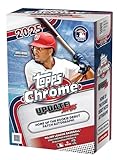
- Rip prospect cards — Bowman is the prospect brand for a reason, and this is the one place the distinction above becomes a shopping decision: 1st Bowman cards only come out of Bowman product. The 2026 Bowman blaster is the retail entry point, and the 2025 Bowman Draft mega box is where the newest draft-class names land. A flagship chrome box such as Chrome Update will not produce one — it chromes the Topps Update checklist, i.e. players who have already debuted, which is the RC-shield side of this guide, not the prospect side.
- Rip flagship rookies — the 300 Old Vintage Topps Baseball Cards in Sealed Pack Lot Gift… is where the official RC-logo rookies of this year’s debut class live, alongside the full base set.
Whichever you rip, protect the hits the moment they come out of the pack. Any card you might grade should go straight into semi-rigid holders — never a hard toploader — so it is submission-ready. And once you know what a rookie is worth chasing, the best rookie cards to invest in is the natural next read.
The Bottom Line
Identifying a rookie card comes down to two eras and one badge:
- 2006–present: find the RC shield on the front. Logo present = official rookie. No logo = not a rookie, even in the player’s debut year. And remember: a first Bowman prospect card is not an official rookie card, even though it may be worth more.
- Pre-2006: no logo exists, so match the set year to the player’s first mainstream MLB base card, and watch for reprints, second-year lookalikes, and XRC/Traded oddities.
When you are still unsure, a checklist, a grading label, or sold comps will confirm it. Learn to spot the RC shield and the Bowman trap, and you will never overpay for a lookalike — or undersell a real one — again.
Recommended Products for This Guide

2018 Topps Baseball #698 Ronald Acuna Jr. Rookie Card Graded PSA 10 | Gem Mint - Bat Pointing Up
Amazon →

2018 Topps Baseball #700 Shohei Ohtani Rookie Card Graded PSA 10 Gem Mint
Amazon →

Roman Anthony 2024 Bowman Draft Baseball Rookie Card #BD19 Graded PSA 10 Cert #131595168
Amazon →

Topps 2025 Chrome Baseball Update Series Value Blaster Box
Amazon →

300 Old Vintage Topps Baseball Cards in Sealed Pack Lot Gift Package
Amazon →